At a Glance
Key differences that define each motorcycle
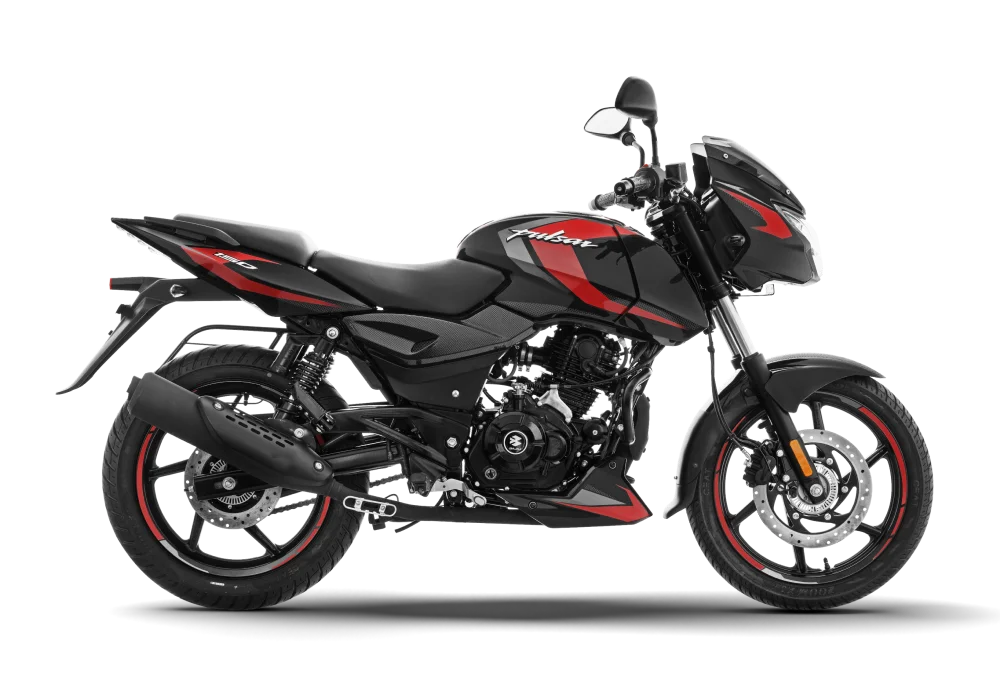
Bajaj Pulsar 150
- 149.50 cc Air-Cooled, 2-valve
- 14 PS @ 8500 rpm
- 47.5 km/l (Claimed)
- 15-litre tank
- 3 variants available
- Single-channel ABS (all variants)
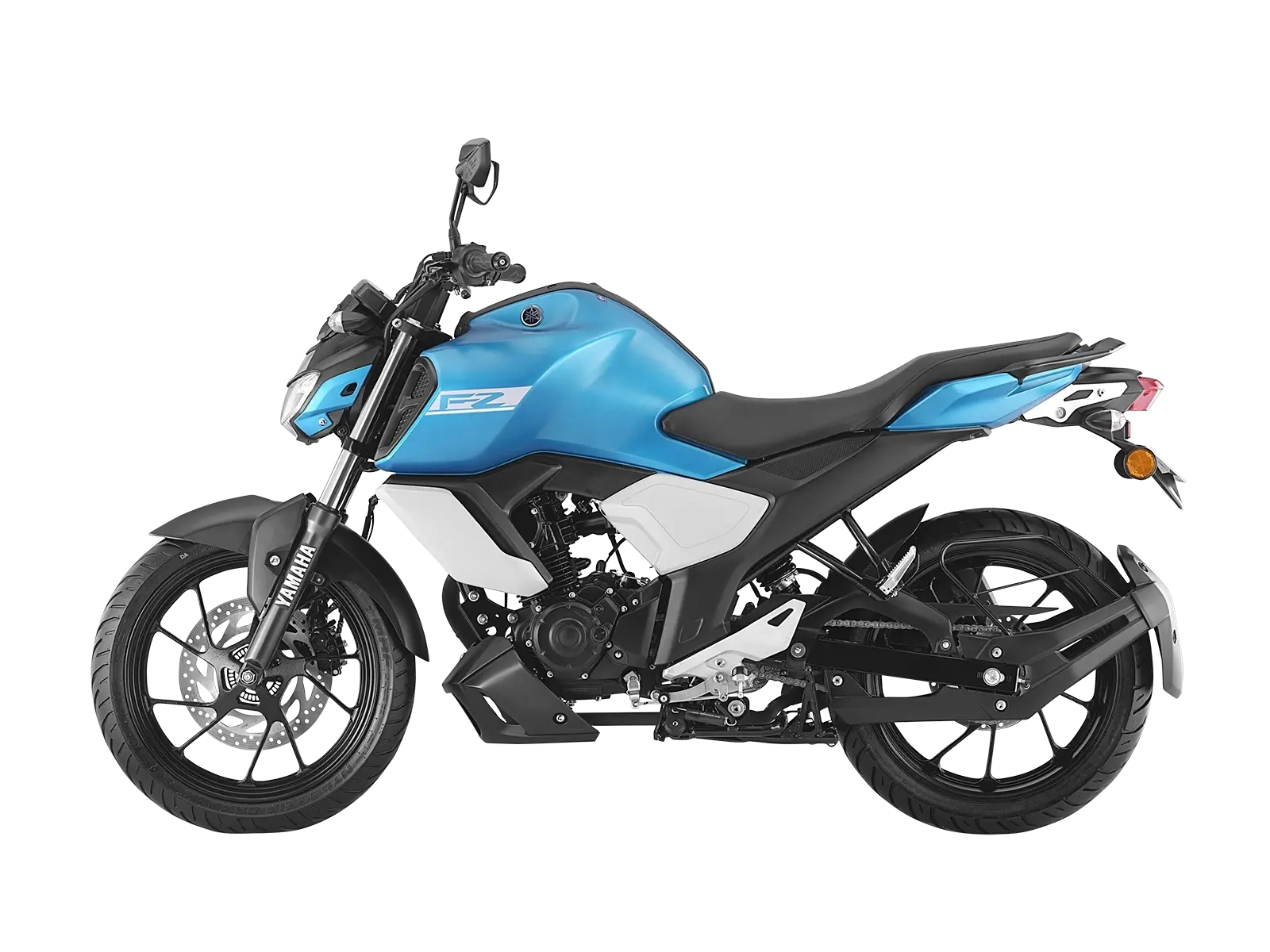
Yamaha FZ-FI
- 149 cc Air-Cooled, 2-valve
- 12.4 PS @ 7250 rpm
- 49.3 km/l (ARAI)
- 13-litre tank
- 1 variant available
- Front & rear disc brakes standard
Full Specification Comparison
Every number that matters — side by side
| Specification | Bajaj Pulsar 150 | Yamaha FZ-FI |
|---|---|---|
| Engine & Performance | ||
| Displacement | 149.50 cc | 149 cc |
| Cooling System | Air-Cooled | Air-Cooled |
| Max Power | 14 PS @ 8500 rpm | 12.4 PS @ 7250 rpm |
| Max Torque | 13.4 Nm @ 6500 rpm | 13.3 Nm @ 5500 rpm |
| Valves per Cylinder | 2 | 2 |
| Compression Ratio | 9.5 : 1 | 9.6 : 1 |
| Bore × Stroke | 56 × 60.7 mm | 57.3 × 57.9 mm |
| Spark Plugs | 2 per Cylinder | 1 per Cylinder |
| Emission Standard | BS6 Phase 2 | BS6 Phase 2 |
| Transmission | 5-Speed Manual | 5-Speed Manual |
| Top Speed | ~115 km/h | ~115 km/h |
| Riding Modes | No | No |
| Traction Control | No | No |
| Fuel & Range | ||
| Mileage (Claimed / ARAI) | 47.5 km/l (Claimed) | 49.3 km/l (ARAI) |
| Fuel Tank | 15 litres | 13 litres |
| Reserve Capacity | 2.4 litres | 2 litres |
| Riding Range | ~700+ km | ~640 km |
| Brakes & Wheels | ||
| Braking System | Single Channel ABS | Single Channel ABS |
| Front Brake | Disc – 260/280 mm (variant) | Disc – 282 mm |
| Rear Brake | Drum / Disc (variant dependent) | Disc – 220 mm (standard) |
| Tyre Type | Tubeless | Tubeless |
| Tyre Size (F / R) | 80/100-17 / 100/90-17 | 100/80-17 / 140/60-17 |
| Wheel Type | Alloy | Alloy |
| Suspension & Chassis | ||
| Front Suspension | Telescopic | Telescopic Fork |
| Rear Suspension | Twin Gas Shock | 7-Step Adjustable Monocross |
| Chassis | Perimeter Frame | Diamond Frame |
| Rear Preload Adjuster | Yes | Yes (7-step) |
| Dimensions & Weight | ||
| Kerb Weight | 148–150 kg | 135 kg |
| Seat Height | 785 mm | 790 mm |
| Ground Clearance | 165 mm | 165 mm |
| Wheelbase | 1320–1345 mm | 1330 mm |
| Overall L × W × H | 2055 × 755 × 1060 mm | 1990 × 780 × 1080 mm |
| Features & Electronics | ||
| Instrument Console | Fully Digital LCD | Fully Digital LCD |
| Headlight | LED | LED |
| DRLs | No | Yes |
| Turn Signals | LED | Halogen |
| Brake / Tail Light | LED | LED |
| Hazard Warning Lights | No | No |
| Bluetooth Connectivity | Yes | Yes (Y-Connect) |
| Call & SMS Alerts | Yes | Yes |
| USB Charging Port | Yes | No |
| Distance to Empty | Yes | Yes |
| Gear Indicator | Yes | Yes |
| Tachometer | No | Digital |
| Service Reminder | Yes | Yes |
| Keyless Ignition | No | No |
| Start Type | Self Start / Kick (variants) | Electric Start |
| Price & Warranty | ||
| Starting Price (ex-showroom) | ₹1,10,120 | ₹1,09,924 |
| Top Variant Price | ₹1,16,916 | ₹1,09,924 (single variant) |
| Number of Variants | 3 | 1 |
| Standard Warranty | 5 Years / 75,000 km | 2 Years / 30,000 km |
★ Green highlights indicate the stronger value in each row. Prices are ex-showroom India averages and may vary by city.
Variant-wise Price Comparison
All variants laid out — find the right one for your budget
Pulsar 150 Variants
Yamaha FZ-FI Variants
Pros & Cons
Honest strengths and weaknesses of each bike
Pros
- Higher peak power (14 PS vs 12.4 PS — 12.9% more)
- Larger 15-litre fuel tank for more riding range (~700+ km)
- Rear disc brake available on Twin Disc UG variant
- USB charging port standard across all variants
- LED turn signals across variants
- Perimeter frame for high-speed stability
- 3 variants to match different budgets and needs
- Exceptional 5-year / 75,000 km warranty
- Muscular styling with strong road presence
- Dual spark plug engine for better combustion efficiency
Cons
- Lower claimed mileage (47.5 km/l vs 49.3 km/l ARAI)
- Heavier at 148–150 kg vs 135 kg
- Smaller front disc (260/280 mm vs 282 mm standard)
- Rear disc only on top variant; base/mid use drum
- Twin gas shock rear (vs FZ-FI's 7-step monocross)
- No tachometer on instrument cluster
- No DRLs
- Narrower 100/90 rear tyre vs FZ-FI's 140/60
Pros
- ARAI-certified 49.3 km/l mileage
- Lighter at just 135 kg — easiest to manoeuvre
- 282 mm front disc and 220 mm rear disc standard
- Wide 140/60-17 rear tyre for better stability and grip
- 7-step adjustable monocross rear suspension
- DRLs (Daytime Running Lights) standard
- Tachometer on fully digital console
- Yamaha Y-Connect Bluetooth app integration
- Smoother, more refined engine character
- Marginally lower starting price (₹1,09,924)
Cons
- Lower peak power (12.4 PS vs 14 PS)
- Smaller 13-litre tank, shorter riding range (~640 km)
- Only 1 variant — no braking or feature choice
- No USB charging port
- Halogen turn signals (vs Pulsar's LED)
- Very weak warranty: only 2 years / 30,000 km
- Higher long-term cost per km of warranty coverage
Key Differences Explained
What really sets these two bikes apart
Engine Character
Both bikes share virtually identical displacement — the Pulsar 150's 149.50 cc versus the FZ-FI's 149 cc — but their characters differ noticeably. The Pulsar 150 produces 14 PS (vs 12.4 PS), benefits from a dual spark plug setup for better combustion, and feels punchier in the mid-range. The Yamaha FZ-FI delivers its 13.3 Nm of torque earlier (5500 rpm vs 6500 rpm) and prioritises refinement and smoothness over outright punch, with Yamaha's Blue Core engine technology keeping vibrations impressively low.
Fuel Efficiency & Range
The Yamaha FZ-FI leads on efficiency with an ARAI-certified 49.3 km/l versus the Pulsar 150's claimed 47.5 km/l. However, the Pulsar 150's significantly larger 15-litre tank versus the FZ-FI's 13-litre unit more than compensates: the Pulsar 150 delivers a theoretical range of ~700+ km versus ~640 km for the FZ-FI, despite being less fuel-efficient.
Braking & Wheels
The Yamaha FZ-FI has a decisive edge in braking hardware at its single price point — a 282 mm front disc and a 220 mm rear disc come standard with single-channel ABS. The Pulsar 150 base and mid variants use a rear drum brake; only the top Twin Disc UG at ₹1,16,916 gets a rear disc. The FZ-FI also gains significantly from its wide 140/60-17 rear tyre (vs 100/90-17 on the Pulsar), offering a larger contact patch for stability and cornering grip.
Features & Connectivity
Both bikes offer Bluetooth connectivity, fully digital consoles, gear indicators, distance-to-empty and service reminders. The Pulsar 150 adds a USB charging port and LED turn signals, while the FZ-FI counters with a tachometer, DRLs and Yamaha's dedicated Y-Connect app ecosystem that enables incoming call alerts, missed call logs and service reminders through the smartphone app. The FZ-FI lacks a USB port entirely.
Warranty & Ownership
The Pulsar 150 wins decisively with a 5-year / 75,000 km warranty against the FZ-FI's 2-year / 30,000 km coverage. That is 3 extra years and 45,000 more kilometres of manufacturer-backed protection — a massive advantage for high-mileage daily commuters. A rider doing 15,000 km per year will exhaust the FZ-FI's warranty in just 2 years versus 5 years on the Pulsar 150.
Price & Value
Both bikes start at virtually the same price — just ₹196 separates them (₹1,09,924 for the FZ-FI vs ₹1,10,120 for the Pulsar base). However, the Pulsar 150 offers three variants up to ₹1,16,916, giving buyers more choice. The FZ-FI provides better braking hardware at its single price point, while the Pulsar 150 counters with a far superior warranty, more power, USB charging and a larger fuel tank.
Expert Verdict
Which one should you actually buy?
Buy the Pulsar 150 if…
- You want stronger performance — 14 PS vs 12.4 PS
- A larger 15-litre tank and longer riding range matter
- The 5-year / 75,000 km warranty is a top priority
- A USB charging port is important for daily use
- You want multiple variant choices to fit your budget
- Rear disc braking at ₹1,16,916 appeals to you
- LED turn signals and muscular Pulsar styling suit you
Buy the Yamaha FZ-FI if…
- ARAI-certified 49.3 km/l mileage is your priority
- Front and rear disc brakes standard matter to you
- You want the lightest option — just 135 kg
- The wide 140 mm rear tyre and streetfighter stance excite you
- A 7-step adjustable monocross rear suspension appeals to you
- DRLs and a tachometer are must-haves on your bike
- Yamaha's refined, smooth engine character is your preference
Overall Winner for Most Riders: Bajaj Pulsar 150. More power (14 PS vs 12.4 PS), a larger 15-litre fuel tank delivering better riding range (~700+ km), a USB charging port, LED turn signals, three variants to choose from and an outstanding 5-year / 75,000 km warranty — versus just 2 years / 30,000 km on the FZ-FI — make the Pulsar 150 the stronger long-term value proposition despite the negligible ₹196 starting price difference. Choose the Yamaha FZ-FI if ARAI-certified mileage, standard front and rear disc brakes, the wide 140 mm rear tyre, a lighter 135 kg chassis and Yamaha's refined engine smoothness are your absolute top priorities.
Frequently Asked Questions
Common questions answered by our experts
The Bajaj Pulsar 150 is better for most buyers who prioritise stronger performance (14 PS), a larger 15-litre tank, a USB charging port, 3 variant choices and a far superior 5-year / 75,000 km warranty. The Yamaha FZ-FI is better if ARAI-certified mileage (49.3 km/l), standard front and rear disc brakes, a lighter 135 kg weight, Yamaha's wide rear tyre, DRLs, tachometer and refined engine smoothness are your top priorities.
The Yamaha FZ-FI starts at ₹1,09,924 while the Bajaj Pulsar 150 base Single Disc starts at ₹1,10,120 — a difference of just ₹196, making them essentially identically priced at entry level. The Pulsar 150 extends further with a Single Disc UG at ₹1,13,143 and a Twin Disc UG at ₹1,16,916, giving buyers more choice, while the FZ-FI remains a single-variant offering.
The Yamaha FZ-FI has better ARAI-certified mileage at 49.3 km/l compared to the Bajaj Pulsar 150's claimed 47.5 km/l. However, the Pulsar 150's larger 15-litre tank versus the FZ-FI's 13-litre unit compensates by delivering a longer theoretical riding range of ~700+ km versus ~640 km for the FZ-FI.
The Bajaj Pulsar 150 makes significantly more power at 14 PS @ 8500 rpm compared to the Yamaha FZ-FI's 12.4 PS @ 7250 rpm — a difference of 12.9%. Peak torque is almost identical at 13.4 Nm (Pulsar) vs 13.3 Nm (FZ-FI), but the FZ-FI delivers its torque 1000 rpm earlier (5500 rpm vs 6500 rpm), feeling smoother and more effortless at city speeds.
Yes, the Yamaha FZ-FI comes standard with a 220 mm rear disc brake along with a 282 mm front disc and single-channel ABS — across its single variant. The Bajaj Pulsar 150 only gains a rear disc brake on its top Twin Disc UG variant priced at ₹1,16,916; its base Single Disc and Single Disc UG variants use a rear drum brake.
The Bajaj Pulsar 150 offers a dramatically better warranty at 5 years / 75,000 km compared to the Yamaha FZ-FI's 2 years / 30,000 km. That is 3 extra years and 45,000 additional kilometres of manufacturer-backed coverage — a decisive advantage for daily commuters. A rider doing 15,000 km per year would exhaust the FZ-FI's warranty in just 2 years, versus 5 years on the Pulsar 150.