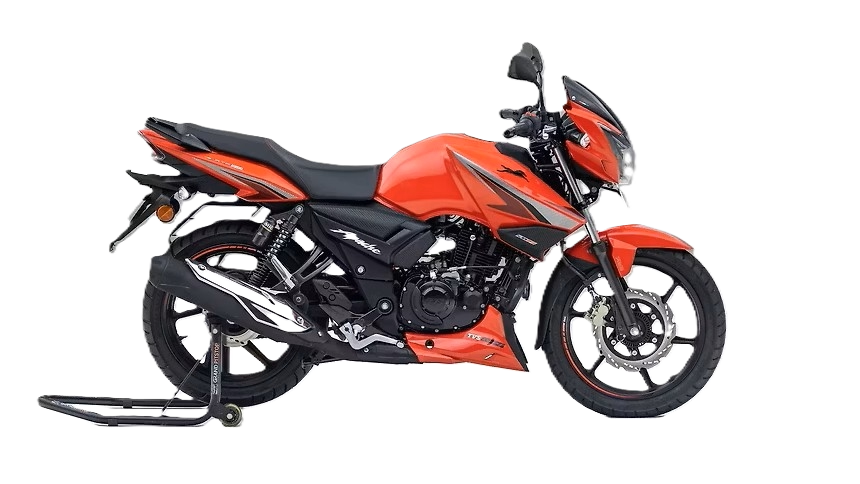
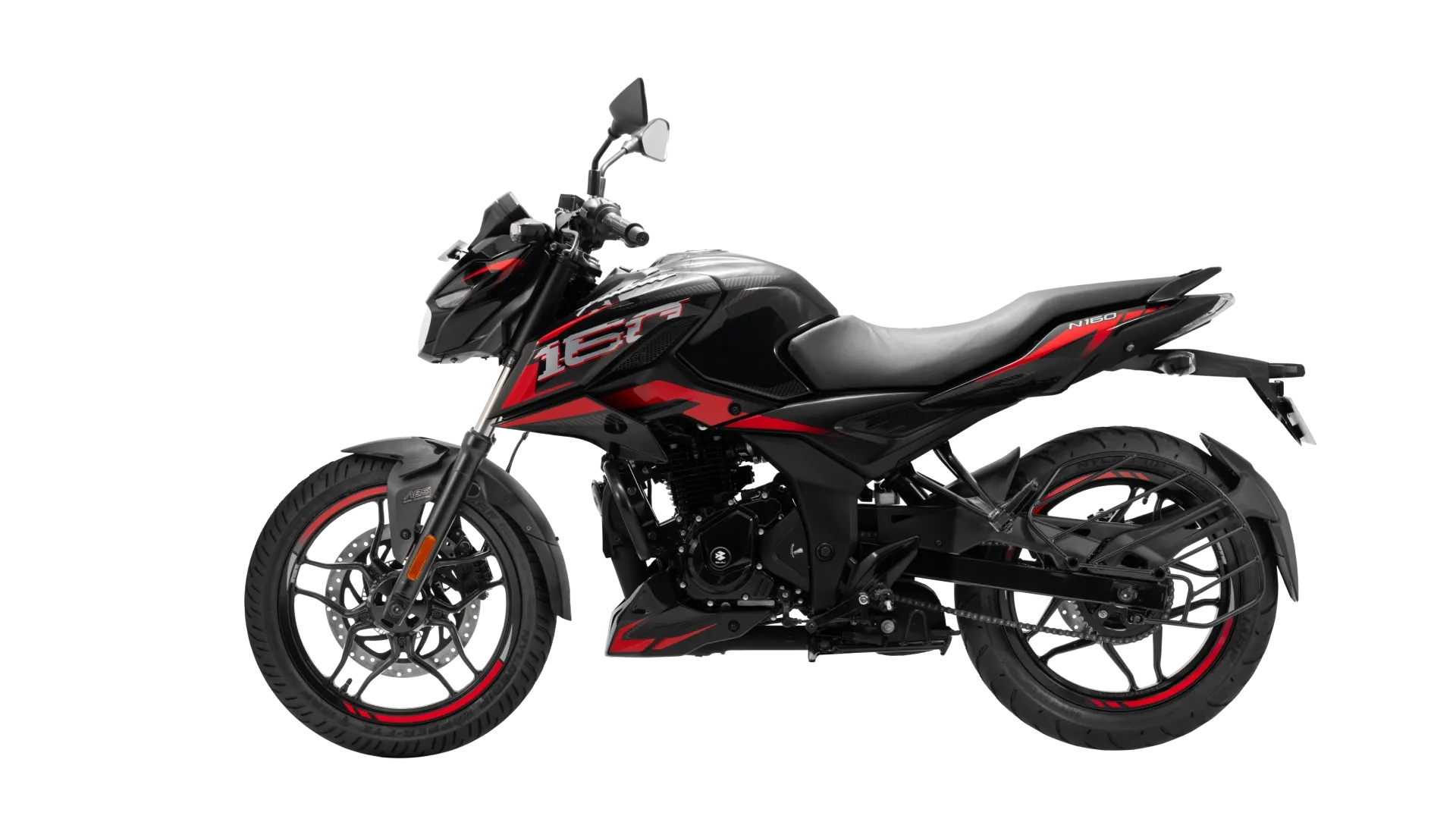
At a Glance
Key differences that define each motorcycle
TVS Apache RTR 160 2V
- 159.7 cc Air-Cooled, 2-valve
- 16.04 PS @ 8750 rpm
- 47 km/l (Claimed)
- 12-litre tank
- 6 variants available
- Ride modes: Sport, Urban, Rain
Bajaj Pulsar N160
- 164.82 cc Air-Cooled, 2-valve
- 16 PS @ 8750 rpm
- 51.6 km/l (ARAI)
- 14-litre tank
- 4 variants available
- Dual-channel ABS (most variants)
Full Specification Comparison
Every number that matters — side by side
| Specification | TVS Apache RTR 160 2V | Bajaj Pulsar N160 |
|---|---|---|
| Engine & Performance | ||
| Displacement | 159.7 cc | 164.82 cc |
| Cooling System | Air-Cooled | Air-Cooled |
| Max Power | 16.04 PS @ 8750 rpm | 16 PS @ 8750 rpm |
| Max Torque | 13.85 Nm @ 7000 rpm | 14.65 Nm @ 6750 rpm |
| Valves per Cylinder | 2 | 2 |
| Compression Ratio | 9.8 : 1 | 10.3 ± 0.3 : 1 |
| Bore × Stroke | 62 × 52.9 mm | 58 × 62.38 mm |
| Emission Standard | BS6 OBD2 | BS6 Phase 2 |
| Transmission | 5-Speed Manual | 5-Speed Manual |
| Top Speed | 107 km/h | ~120 km/h |
| Riding Modes | Sport, Urban, Rain | No (Road/Rain/Off-Road on top variant only) |
| Traction Control | No | No |
| Fuel & Range | ||
| Mileage (Claimed) | 47 km/l (Claimed) | 51.6 km/l (ARAI Certified) |
| Fuel Tank | 12 litres | 14 litres |
| Reserve Capacity | 2.5 litres | 2.8 litres |
| Riding Range | 564 km | ~722 km |
| Brakes & Wheels | ||
| Braking System | Single / Dual Channel ABS | Single / Dual Channel ABS |
| Front Brake | Disc – 270 mm | Disc – 300 mm |
| Rear Brake | Drum 130 mm / Disc 200 mm (variant dependent) | Disc – 230 mm |
| Dual-Channel ABS From | ₹1,24,661 (top variant only) | ₹1,17,619 (2nd variant onwards) |
| Tyre Type | Tubeless | Tubeless |
| Tyre Size (F / R) | 90/90-17 / 110/80-17 | 100/80-17 / 130/70-17 |
| Wheel Type | Alloy | Alloy |
| Suspension & Chassis | ||
| Front Suspension | Telescopic Forks | Telescopic / USD Fork (top variants) |
| Rear Suspension | Mono Tube Inverted Gas Filled Shock | Monoshock |
| Chassis | Double Cradle Frame | Perimeter Frame |
| Rear Preload Adjuster | Yes | Yes |
| Dimensions & Weight | ||
| Kerb Weight | 139–140 kg | 152–154 kg |
| Seat Height | 790 mm | 795 mm |
| Ground Clearance | 165 mm | 165 mm |
| Wheelbase | 1300 mm | 1358 mm |
| Overall L × W × H | 2085 × 730 × 1105 mm | 1989 × 743 × 1050 mm |
| Features & Electronics | ||
| Instrument Console | Fully Digital LCD | Digital |
| Headlight | LED | LED Projector |
| DRLs | Yes | Yes |
| Turn Signals | Halogen | LED |
| Hazard Warning Lights | No | Yes |
| Riding Modes | Sport / Urban / Rain (all variants) | No (Road/Rain/Off-Road on top variant only) |
| Traction Control | No | No |
| Bluetooth Connectivity | Yes (select variants) | Yes (all variants) |
| Call & SMS Alerts | Yes (Bluetooth variant) | Yes (all variants) |
| USB Charging Port | No | Yes |
| Distance to Empty | Yes | Yes |
| Gear Indicator | Yes | Yes |
| Service Reminder | Yes | Yes |
| Tachometer | Digital | Digital |
| Keyless Ignition | No | No |
| Start Type | Electric & Kick | Electric |
| Price & Warranty | ||
| Starting Price (ex-showroom) | ₹1,09,036 | ₹1,14,840 |
| Top Variant Price | ₹1,24,661 | ₹1,27,333 |
| Number of Variants | 6 | 4 |
| Standard Warranty | 5 Years | 5 Years / 75,000 km |
★ Green highlights indicate the stronger value in each row. Prices are ex-showroom India averages and may vary by city.
Variant-wise Price Comparison
All variants laid out — find the right one for your budget
Apache RTR 160 2V Variants
Pulsar N160 Variants
Pros & Cons
Honest strengths and weaknesses of each bike
Pros
- Significantly lower starting price (₹1,09,036 vs ₹1,14,840)
- Ride modes: Sport, Urban & Rain on all variants
- Lighter at 139–140 kg vs 152–154 kg
- 6 variants — more choice across price points
- Fully digital LCD instrument cluster
- Slightly higher peak power (16.04 PS vs 16 PS)
- Electric & kick start on most variants
- Strong mid-range throttle response for city riding
- Sporty Apache racing heritage styling
Cons
- Lower ARAI mileage (47 km/l vs 51.6 km/l)
- Smaller 12-litre tank, shorter range (564 km vs ~722 km)
- Dual-channel ABS only on top variant (₹1,24,661)
- Smaller 270 mm front disc vs 300 mm on N160
- Rear drum on base variants
- No USB charging port on any variant
- Bluetooth only on select variants (not all)
- Lower top speed (107 km/h vs ~120 km/h)
- No hazard warning lights
- Halogen turn signals vs LED on N160
- Warranty km coverage not specified vs N160's 75,000 km
Pros
- Superior ARAI-certified mileage of 51.6 km/l
- Larger 14-litre fuel tank for longer range (~722 km)
- Dual-channel ABS from second variant (₹1,17,619)
- Larger 300 mm front disc brake
- Rear disc (230 mm) standard across all variants
- Bluetooth and USB charging standard on all variants
- LED turn signals and hazard warning lights
- Higher torque (14.65 Nm vs 13.85 Nm)
- Higher top speed (~120 km/h vs 107 km/h)
- Wider tyres (100/80-17 F / 130/70-17 R)
- USD forks available on top two variants
- Exceptional 5-year / 75,000 km warranty
Cons
- Higher starting price (₹1,14,840 vs ₹1,09,036)
- Heavier at 152–154 kg vs 139–140 kg
- No ride modes (except top split-seat variant)
- No traction control on any variant
- Only 4 variants — fewer options
Key Differences Explained
What really sets these two bikes apart
Engine & Performance
Both bikes use a 159.7–164.82 cc air-cooled 2-valve single-cylinder engine, making this the closest-matched rivalry on paper. The Apache 2V makes 16.04 PS — fractionally more than the N160's 16 PS — but the N160 produces significantly more torque at 14.65 Nm vs 13.85 Nm, delivering a stronger mid-range pull ideal for loaded city riding. The N160's claimed top speed of ~120 km/h also comfortably exceeds the Apache 2V's 107 km/h, giving it a meaningful highway edge.
Fuel Efficiency & Range
The N160 dominates on paper with an ARAI-certified 51.6 km/l against the Apache 2V's 47 km/l claim — a 9.7% advantage backed by independent certification. With a larger 14-litre tank, the N160 stretches to a theoretical 722 km range versus the Apache's 564 km with its 12-litre unit. That's over 150 km more range per fill — a significant real-world benefit for daily commuters.
Braking & Safety
The N160 leads decisively in braking. Its 300 mm front disc is 30 mm larger than the Apache 2V's 270 mm unit, and dual-channel ABS is available from just ₹1,17,619 — the second variant. The Apache 2V requires spending up to ₹1,24,661 (the top variant) to get dual-channel ABS, and its base variants still use a rear drum brake. The N160 features a 230 mm rear disc across all variants.
Ride Modes & Technology
This is where the Apache RTR 160 2V pulls clearly ahead. Sport, Urban and Rain riding modes are standard across all six variants — including the base RM Drum Black Edition at ₹1,09,036. The N160 offers Road/Rain/Off-Road modes only on its top ₹1,27,333 variant. For everyday riders who want mode-adaptive throttle response and ABS tuning without paying a premium, the Apache 2V wins convincingly.
Weight, Handling & Agility
The Apache RTR 160 2V weighs 139–140 kg — up to 15 kg lighter than the N160's 152–154 kg. That weight advantage makes the Apache noticeably more agile in dense city traffic and easier to manoeuvre in tight spaces. The N160's perimeter frame offers strong stability and planted cornering confidence, but the Apache's nimbler package suits urban-first riders who prioritise ease of handling.
Price & Value
The Apache 2V starts ₹5,804 cheaper (₹1,09,036 vs ₹1,14,840), making it the more accessible entry. However, its top variant at ₹1,24,661 is only ₹2,672 less than the N160's top at ₹1,27,333. Given that the N160 includes USB charging, Bluetooth, LED turn signals, hazard lights and a larger disc on all variants, it delivers more standard equipment per rupee at comparable price points. The Apache wins on base price; the N160 wins on features-per-rupee.
Expert Verdict
Which one should you actually buy?
Buy the Apache RTR 160 2V if…
- Budget is a priority — starts ₹5,804 cheaper at ₹1,09,036
- Ride modes on every variant matter to you
- You prefer a significantly lighter motorcycle (up to 15 kg less)
- Agile city handling is more important than highway range
- You want more variant choices across six price points
- You enjoy sporty Apache styling and racing character
- Kick start as a backup start option is reassuring
Buy the Pulsar N160 if…
- Best-in-class ARAI mileage (51.6 km/l) matters to you
- Dual-channel ABS at a lower price (₹1,17,619) is important
- You want a longer riding range (~722 km) per tank
- USB charging and Bluetooth standard from base variant
- Stronger braking with a 300 mm front disc is a priority
- Higher torque and top speed suit your riding style
- The 5-year / 75,000 km warranty coverage is a key factor
Overall Winner for Most Riders: Bajaj Pulsar N160. Despite costing ₹5,804 more at the base level, the Pulsar N160 justifies its premium with superior ARAI-certified mileage, a significantly larger fuel tank, dual-channel ABS from the second variant, a bigger 300 mm front disc with rear disc on all variants, Bluetooth and USB charging standard across the range, LED turn signals, hazard warning lights and an outstanding 5-year / 75,000 km warranty. Choose the TVS Apache RTR 160 2V if a lower entry price, ride modes on every variant and a lighter, more agile package are your top priorities.
Frequently Asked Questions
Common questions answered by our experts
The Bajaj Pulsar N160 is the better all-round motorcycle for most buyers — it offers ARAI-certified 51.6 km/l mileage, a larger 14-litre tank, dual-channel ABS from the second variant, a bigger 300 mm front disc, Bluetooth and USB charging on all variants, LED turn signals, hazard warning lights and a superior 5-year / 75,000 km warranty. The TVS Apache RTR 160 2V is better if you want a lower starting price (₹1,09,036), ride modes across all variants, significantly lighter weight (139–140 kg) and a more agile city package.
The TVS Apache RTR 160 2V starts at ₹1,09,036 while the Bajaj Pulsar N160 starts at ₹1,14,840 ex-showroom — the Apache is ₹5,804 cheaper at the entry level. At the top trim, the Apache's Dual Channel ABS variant is ₹1,24,661 versus the N160's top at ₹1,27,333 — a difference of just ₹2,672. Both prices are India averages and may vary by city.
The Bajaj Pulsar N160 has significantly better official mileage at 51.6 km/l (ARAI certified) compared to the TVS Apache RTR 160 2V's claimed 47 km/l. The N160 also has a larger 14-litre fuel tank versus the Apache's 12-litre unit, resulting in a riding range of ~722 km versus 564 km — a difference of approximately 158 km per fill.
Peak power is almost identical — the Apache RTR 160 2V produces 16.04 PS while the Pulsar N160 produces 16 PS, both at 8750 rpm. However, the N160 produces meaningfully more torque at 14.65 Nm versus the Apache's 13.85 Nm, giving the N160 a stronger mid-range pull. The N160 also has a considerably higher claimed top speed of ~120 km/h versus the Apache's 107 km/h.
Yes, the TVS Apache RTR 160 2V offers Sport, Urban and Rain riding modes across all six of its variants — including the base RM Drum Black Edition. Sport mode enables maximum performance, Urban mode is optimised for city commuting, and Rain mode softens throttle response for wet roads. The Bajaj Pulsar N160 offers Road, Rain and Off-Road modes only on its top Dual Channel ABS USD (Split Seat) variant priced at ₹1,27,333.
The Bajaj Pulsar N160 comes with a clearly specified 5-year / 75,000 km warranty. The TVS Apache RTR 160 2V offers a 5-year warranty but does not publish a specific kilometre cap in its documentation. For high-mileage daily commuters who clock 15,000–20,000 km per year, the N160's explicit 75,000 km coverage gives greater long-term cost certainty.