At a Glance
Key differences that define each motorcycle
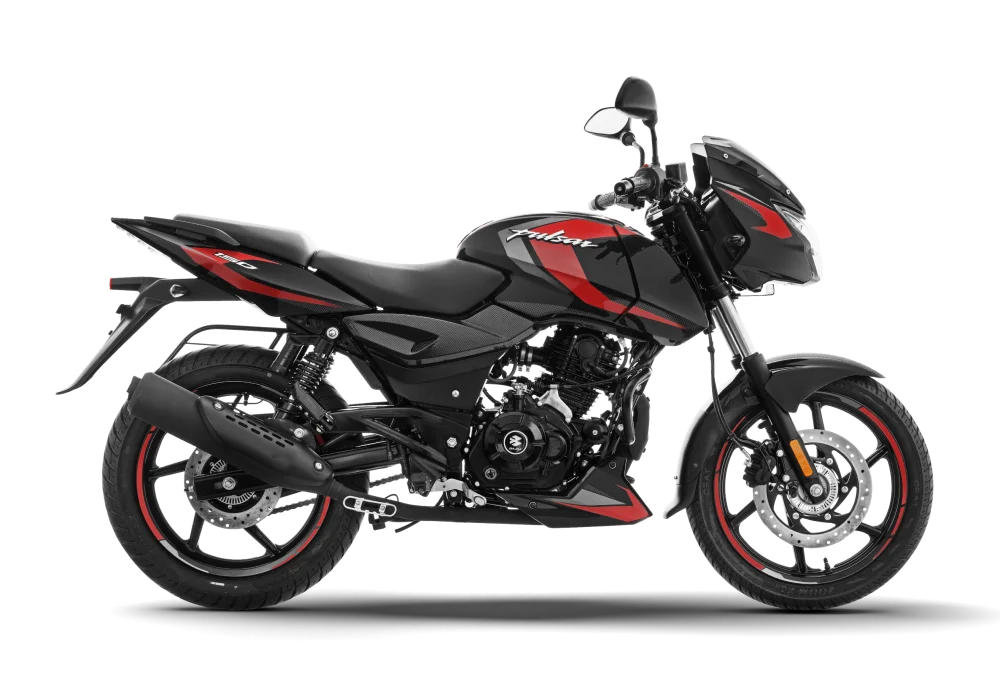
Bajaj Pulsar 150
- 149.50 cc Air-Cooled, 2-valve
- 14 PS @ 8500 rpm
- 47.5 km/l (Claimed)
- 15-litre tank
- 3 variants available
- Single-channel ABS (all variants)
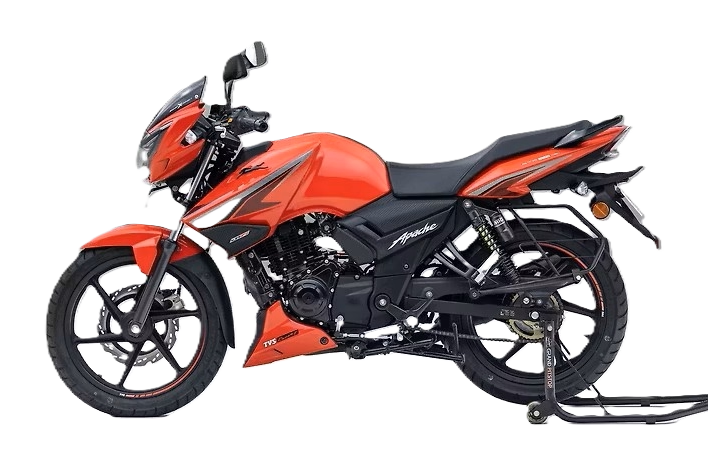
TVS Apache RTR 160 2V
- 159.7 cc Air-Cooled, 2-valve
- 16.04 PS @ 8750 rpm
- 47 km/l (Claimed)
- 12-litre tank
- 6 variants available
- Ride modes: Sport, Urban, Rain
Full Specification Comparison
Every number that matters — side by side
| Specification | Bajaj Pulsar 150 | TVS Apache RTR 160 2V |
|---|---|---|
| Engine & Performance | ||
| Displacement | 149.50 cc | 159.7 cc |
| Cooling System | Air-Cooled | Air-Cooled |
| Max Power | 14 PS @ 8500 rpm | 16.04 PS @ 8750 rpm |
| Max Torque | 13.4 Nm @ 6500 rpm | 13.85 Nm @ 7000 rpm |
| Valves per Cylinder | 2 | 2 |
| Compression Ratio | 9.5 : 1 | 9.8 : 1 |
| Bore × Stroke | 56 × 60.7 mm | 62 × 52.9 mm |
| Spark Plugs | 2 per cylinder | 1 |
| Emission Standard | BS6 Phase 2 | BS6 OBD2 |
| Transmission | 5-Speed Manual | 5-Speed Manual |
| Top Speed | ~115 km/h | 107 km/h |
| Riding Modes | No | Sport, Urban, Rain |
| Traction Control | No | No |
| Fuel & Range | ||
| Mileage (Claimed) | 47.5 km/l | 47 km/l |
| Fuel Tank | 15 litres | 12 litres |
| Reserve Capacity | 2.4 litres | 2.5 litres |
| Riding Range | ~700+ km | ~564 km |
| Brakes & Wheels | ||
| Braking System | Single Channel ABS | Single / Dual Channel ABS |
| Front Brake | Disc – 260 / 280 mm (variant) | Disc – 270 mm |
| Rear Brake | Drum / Disc (variant dependent) | Drum / Disc (variant dependent) |
| Tyre Type | Tubeless | Tubeless |
| Tyre Size (F / R) | 80/100-17 / 100/90-17 | 90/90-17 / 110/80-17 |
| Wheel Type | Alloy | Alloy |
| Suspension & Chassis | ||
| Front Suspension | Telescopic | Telescopic Forks |
| Rear Suspension | Twin Gas Shock | Mono Tube Inverted Gas Filled Shock |
| Chassis | Perimeter Frame | Double Cradle Frame |
| Rear Preload Adjuster | Yes | Yes |
| Dimensions & Weight | ||
| Kerb Weight | 148–150 kg | 139–140 kg |
| Seat Height | 785 mm | 790 mm |
| Ground Clearance | 165 mm | 165 mm |
| Wheelbase | 1320–1345 mm | 1300 mm |
| Overall L × W × H | 2055 × 755 × 1060 mm | 2085 × 730 × 1105 mm |
| Features & Electronics | ||
| Instrument Console | Fully Digital LCD | Fully Digital LCD |
| Headlight | LED | LED |
| DRLs | No | Yes |
| Turn Signals | LED | Halogen |
| Hazard Warning Lights | No | No |
| Riding Modes | No | Sport, Urban, Rain |
| Traction Control | No | No |
| Bluetooth Connectivity | Yes (all variants) | Yes (select variants) |
| Call & SMS Alerts | Yes | Yes (Bluetooth variant) |
| USB Charging Port | Yes | No |
| Distance to Empty | Yes | Yes |
| Navigation | No | Yes (select variants) |
| Gear Indicator | Yes | Yes |
| Tachometer | No | Digital |
| Service Reminder | Yes | Yes |
| Keyless Ignition | No | No |
| Price & Warranty | ||
| Starting Price (ex-showroom) | ₹1,10,120 | ₹1,09,036 |
| Top Variant Price | ₹1,16,916 | ₹1,24,661 |
| Number of Variants | 3 | 6 |
| Standard Warranty | 5 Years / 75,000 km | 5 Years |
★ Green highlights indicate the stronger value in each row. Prices are ex-showroom India averages and may vary by city.
Variant-wise Price Comparison
All variants laid out — find the right one for your budget
Pulsar 150 Variants
Apache RTR 160 2V Variants
Pros & Cons
Honest strengths and weaknesses of each bike
Pros
- Larger 15-litre fuel tank — ~140 km more range per fill
- Better claimed mileage (47.5 km/l vs 47 km/l)
- Exceptional 5-year / 75,000 km warranty
- Bluetooth standard on all variants
- USB charging port standard
- Lower seat height (785 mm vs 790 mm) — more accessible
- LED turn signals standard
- Twin Disc UG tops out at ₹1,16,916 — value ceiling
- Perimeter frame for superior highway stability
- Dual spark plug engine for better combustion efficiency
Cons
- Significantly lower peak power (14 PS vs 16.04 PS)
- No riding modes on any variant
- Heavier at 148–150 kg vs 139–140 kg
- Rear drum on base two variants
- No DRLs
- No tachometer on instrument console
- Only 3 variants — limited choice
- Twin gas shock rear suspension — less sporty feel
Pros
- Higher peak power — 16.04 PS @ 8750 rpm (14.6% more)
- Ride modes: Sport, Urban & Rain across all variants
- Lighter at 139–140 kg — more agile in city traffic
- Lower starting price (₹1,09,036 vs ₹1,10,120)
- 6 variants — wider choice for every budget
- Dual-channel ABS on top variant (₹1,24,661)
- Monoshock rear suspension for better ride quality
- DRLs standard
- Navigation on select Bluetooth variants
- Digital tachometer on console
Cons
- Smaller 12-litre tank — ~140 km less range per fill
- Slightly lower mileage (47 km/l vs 47.5 km/l)
- Warranty km ceiling not explicitly stated (vs 75,000 km)
- Bluetooth only from 4th variant (₹1,20,308)
- No USB charging port on any variant
- Halogen turn signals
- Top variant ₹7,745 more expensive than Pulsar's top
- No traction control
Key Differences Explained
What really sets these two bikes apart
Engine & Performance
The performance gap here is the most significant differentiator. The Apache RTR 160 2V packs a 159.7 cc engine producing 16.04 PS — over 14% more power than the Pulsar 150's 149.50 cc / 14 PS unit. The Apache also makes 13.85 Nm of torque versus 13.4 Nm for the Pulsar. Both are air-cooled 2-valve motors, but the Apache's larger bore (62 mm vs 56 mm) and higher compression (9.8:1 vs 9.5:1) contribute to its more spirited character. The Pulsar's dual spark plug setup helps with combustion efficiency but does not close the power gap.
Fuel Efficiency & Range
Mileage figures are close — the Pulsar 150 claims 47.5 km/l against the Apache's 47 km/l. The decisive gap is in the fuel tank: 15 litres vs 12 litres. This gives the Pulsar a theoretical riding range of ~700+ km versus ~564 km for the Apache — a difference of roughly 140 km per tank. For a daily commuter covering 40–50 km per day, the Pulsar requires far fewer fuel stops over a month, translating into real-world convenience every week.
Braking & Safety
Both bikes start with single-channel ABS, but the Apache eventually offers dual-channel ABS on its top variant (₹1,24,661) — the Pulsar 150 does not offer dual-channel ABS at any price. The Pulsar's base variants have a rear drum, matching the Apache's two entry variants, while the Apache's mid-tier variants add a 200 mm rear disc. The Pulsar's Twin Disc UG (₹1,16,916) provides a 280 mm front disc — 10 mm larger than the Apache's 270 mm unit. The Apache's wider rear tyre (110/80-17 vs 100/90-17) also aids cornering grip and braking stability.
Ride Modes & Technology
The Apache RTR 160 2V holds a clear advantage with Sport, Urban and Rain ride modes standard across all six variants — including the base ₹1,09,036 model. These adjust throttle response and ABS behaviour for different road conditions. The Bajaj Pulsar 150 does not offer ride modes on any variant. On connectivity, the Pulsar has Bluetooth standard on all variants (vs select Apache variants), and is the only bike here with a USB charging port. The Apache gains navigation on higher variants.
Warranty & Ownership
Both bikes offer a 5-year warranty, but the Bajaj Pulsar 150 specifies 75,000 km of coverage — a clear, measurable commitment that the Apache RTR 160 2V does not match with an equivalent kilometre guarantee. For a rider covering 15,000–20,000 km per year, the Pulsar's 75,000 km warranty provides protection through nearly 4–5 years of heavy daily use. The Apache's service intervals are also more frequent (every 2,500–3,000 km) versus the Pulsar's 4,500–5,000 km schedule, adding slightly to ownership effort.
Price & Value
The Apache starts ₹1,084 cheaper at base (₹1,09,036 vs ₹1,10,120), but the Pulsar wins convincingly through the range: its top Twin Disc UG variant at ₹1,16,916 is ₹7,745 less than the Apache's top Dual Channel ABS variant at ₹1,24,661. The Pulsar's ₹1,16,916 top variant already includes rear disc braking, making it an exceptional value package. The Apache requires spending up to ₹1,24,661 to access dual-channel ABS, while the Pulsar never offers it — a trade-off buyers must weigh.
Expert Verdict
Which one should you actually buy?
Buy the Pulsar 150 if…
- Long riding range and a large fuel tank are your priority
- The 5-year / 75,000 km warranty gives you long-term confidence
- You want Bluetooth and USB charging on every single variant
- Highway stability and a lower seat height suit your riding style
- You want the top variant at the lowest possible price (₹1,16,916)
- Proven platform reliability and wide Bajaj service network matter
- Fuel efficiency over performance is your daily priority
Buy the Apache RTR 160 2V if…
- You want noticeably more power (16.04 PS) for spirited riding
- Ride modes — Sport, Urban and Rain — matter to you
- A lighter, more agile motorcycle (139–140 kg) is important
- You want the lowest possible entry price (₹1,09,036)
- 6 variant choices let you pick the exact spec you need
- Dual-channel ABS on the top variant is something you value
- Turn-by-turn navigation on select variants adds daily utility
Overall Winner: Depends on your priority. This is one of the most closely matched comparisons in the 150–160cc segment. The Bajaj Pulsar 150 wins on fuel tank size, riding range, warranty coverage (5 years / 75,000 km), Bluetooth and USB charging standard across all variants, and top-variant value — making it the stronger choice for daily long-distance commuters and value-seeking buyers. The TVS Apache RTR 160 2V wins on outright performance (16.04 PS), ride modes across all variants, lighter weight, lower base price and dual-channel ABS availability — making it the better pick for riders who prioritise performance and sportiness over pure economy. Both bikes score equally well for most buyers; your choice should come down to whether you value range and warranty, or power and riding dynamics.
Frequently Asked Questions
Common questions answered by our experts
Both are strong contenders in their own right. The Bajaj Pulsar 150 is better for riders who prioritise fuel range (15-litre tank, ~700+ km), Bluetooth and USB charging on all variants, a superior 5-year / 75,000 km warranty, and better top-variant value. The TVS Apache RTR 160 2V is better for riders who want stronger performance (16.04 PS), ride modes across all variants, a lighter chassis (139–140 kg), and the option of dual-channel ABS.
The TVS Apache RTR 160 2V starts at ₹1,09,036 (RM Drum – Black Edition), making it ₹1,084 cheaper than the Pulsar 150's base at ₹1,10,120. However, through the range, the Pulsar is cheaper: its top Twin Disc UG variant at ₹1,16,916 is ₹7,745 less than the Apache's top Dual Channel ABS at ₹1,24,661. Prices are approximate ex-showroom India averages and may vary by city.
The Bajaj Pulsar 150 has a marginally better claimed mileage at 47.5 km/l versus the TVS Apache RTR 160 2V's 47 km/l — a negligible difference in practice. The far more impactful advantage is the Pulsar's 15-litre fuel tank compared to the Apache's 12 litres, giving the Pulsar a theoretical range of approximately 700+ km against the Apache's ~564 km. For daily commuters, this means significantly fewer fuel stops.
The TVS Apache RTR 160 2V makes significantly more power at 16.04 PS @ 8750 rpm compared to the Bajaj Pulsar 150's 14 PS @ 8500 rpm — a difference of over 14%. The Apache also produces more torque at 13.85 Nm versus 13.4 Nm. In real-world riding, the Apache feels noticeably more responsive and energetic, especially during overtakes and at higher speeds.
Yes, the TVS Apache RTR 160 2V offers Sport, Urban and Rain riding modes across all six of its variants — including the base RM Drum – Black Edition at ₹1,09,036. Sport mode delivers maximum throttle response, Urban tunes power delivery for city traffic, and Rain softens throttle and adjusts ABS sensitivity for wet roads. The Bajaj Pulsar 150 does not offer riding modes on any of its three variants.
The Bajaj Pulsar 150 offers a clearly specified warranty of 5 years or 75,000 km. The TVS Apache RTR 160 2V also offers a 5-year warranty but does not specify an equivalent kilometre cap. For high-mileage daily commuters covering 15,000–20,000 km per year, the Pulsar 150's explicitly stated 75,000 km warranty provides a measurable and meaningful advantage in long-term ownership protection.